
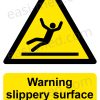
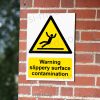
Warning Slippery Surface Contamination Sign – Industrial Hazard Alert
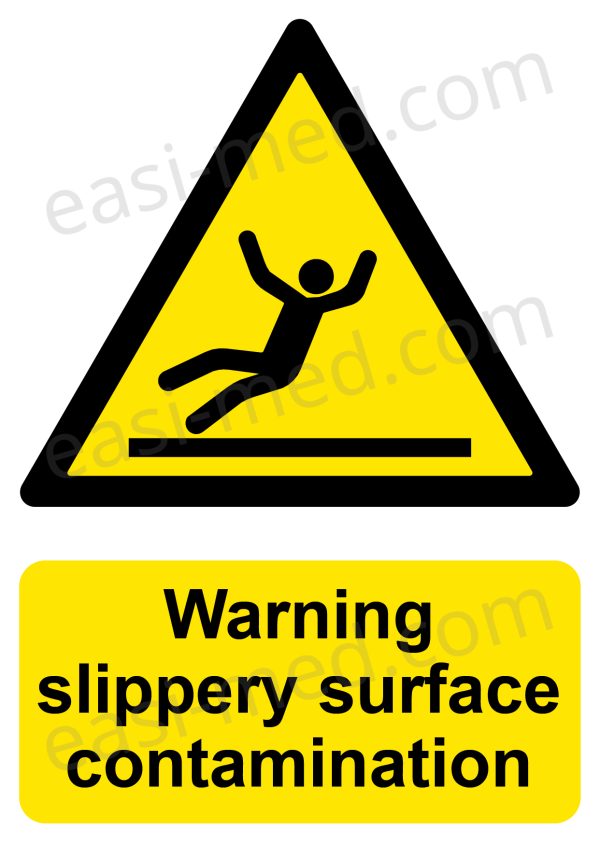
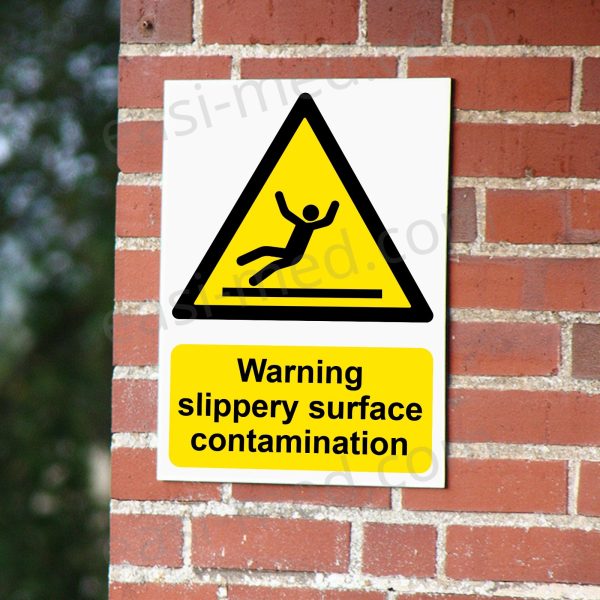
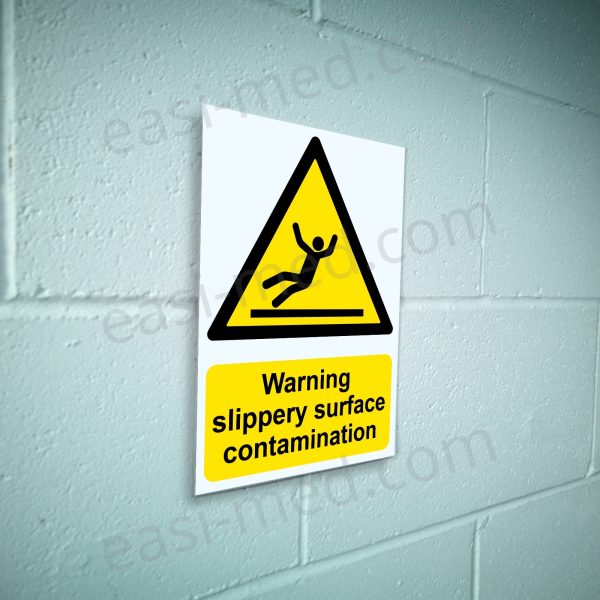
The Warning Slippery Surface Contamination Sign provides specialized hazard communication for industrial and commercial environments where floor contamination from oils, chemicals, or process substances creates significant slip risks. This professional slippery surface contamination sign combines the universally recognised yellow warning triangle with slip hazard pictogram alongside explicit “Warning slippery surface contamination” text, delivering both immediate visual alert and specific hazard identification crucial for protecting workers and visitors in contaminated areas. Whether you manage manufacturing facilities, food production plants, vehicle maintenance workshops, or any industrial operation where substances contaminate floors, this warning slippery contamination sign represents essential specialized safety communication addressing the unique challenges of contamination-related slip hazards.
Understanding Contamination-Related Slip Hazards
Surface contamination represents a particularly dangerous category of slip hazards because contaminants dramatically reduce floor slip resistance often creating near-frictionless conditions where even careful walking becomes hazardous. Unlike water which eventually evaporates or can be mopped leaving floors safe, many industrial contaminants including oils, greases, chemicals, process fluids, and food substances create persistent hazards that resist simple cleaning, spread easily across large areas through foot traffic, remain slippery even in thin invisible films, and may require specialized cleaning procedures for safe removal. The surface contamination warning sign addresses these unique characteristics by explicitly identifying contamination as the specific hazard mechanism rather than generic “wet floor” or “slippery surface” warnings that don’t convey the particular dangers of contaminated surfaces.
Industrial contamination creates slip hazards through multiple mechanisms making them particularly dangerous. Oils and greases form lubricating films between footwear and floors eliminating traction even on otherwise slip-resistant surfaces. Chemical spills may be invisible yet extremely slippery, giving no visual warning of hazards. Food substances including fats, proteins, and carbohydrates create sticky then slippery residues as they break down. Process fluids like coolants, hydraulic oils, or lubricants spread rapidly and penetrate porous surfaces making removal difficult. Dust and powder contamination becomes extremely slippery when wetted creating compound hazards. These contamination mechanisms all share the characteristic that they’re often not immediately visible, can exist in concentrations too low to see yet sufficient to eliminate traction, and resist casual cleaning requiring proper protocols for safe removal.
According to Health and Safety Executive guidance on managing slip risks in industrial environments, contamination represents one of the most common and preventable causes of workplace slip accidents. The explicit identification of contamination in warning signage helps workers understand they’re not just dealing with wet floors but with potentially invisible hazardous substances requiring enhanced caution and proper cleaning protocols. This specific slippery floor contamination sign bridges the gap between generic slip hazard warnings and the specialized understanding needed to safely navigate and properly remediate contaminated industrial environments.
When Contamination-Specific Signage Is Essential
This warning slippery contamination sign is specifically designed for industrial and commercial environments where contamination from oils, chemicals, or process substances creates slip hazards distinct from simple wet conditions. Using contamination-specific signage rather than generic wet floor warnings serves multiple critical functions including explicitly identifying the hazard type allowing appropriate response including proper PPE selection and cleaning protocols, alerting workers that invisible contamination may be present requiring caution even when surfaces appear dry, indicating that specialized cleaning rather than simple mopping may be required for safe remediation, and communicating to management and contractors that contamination control procedures need implementation rather than routine floor maintenance.
Typical applications requiring contamination-specific surface contamination warning signs include manufacturing facilities where machining oils, cutting fluids, or lubricants contaminate floors around equipment, vehicle maintenance workshops where oils, greases, and automotive fluids create persistent floor hazards, food processing plants where fats, oils, proteins, or organic materials contaminate production and cleaning areas, chemical manufacturing and storage facilities where process chemicals or raw materials may contaminate floors, warehouses handling oils, chemicals, or substances in packaging that may leak creating contamination, loading bays where vehicle fluids, cargo substances, or weather-tracked contaminants create mixed hazards, and industrial kitchens where cooking oils, fats, and food substances create specialized contamination requiring appropriate protocols for safe management and remediation.
Key Features of Our Warning Slippery Surface Contamination Sign
- ISO 7010 compliant design – incorporates the internationally standardised yellow warning triangle with slip hazard pictogram ensuring universal visual recognition, supplemented by explicit contamination-specific text providing detailed hazard identification beyond generic slip warnings.
- Explicit contamination identification – “slippery surface contamination” text specifically identifies the hazard mechanism as contamination rather than simple moisture, enabling appropriate response including proper cleaning protocols, PPE selection, and specialized remediation procedures rather than routine maintenance approaches.
- Industrial-grade durability – manufactured from materials specifically selected to withstand harsh industrial environments including exposure to oils, chemicals, solvents, and substances that would degrade standard signage, ensuring long-term legibility and effectiveness despite challenging conditions.
- High visibility construction – bold yellow background with black text and symbol creates maximum contrast ensuring signs remain noticeable in industrial environments often characterized by visual complexity, machinery, equipment, and challenging lighting conditions.
- Chemical resistant finish – advanced coating technology protects signs from degradation when exposed to oils, solvents, cleaning chemicals, and industrial substances commonly present in contamination-prone environments, maintaining appearance and legibility throughout extended service life.
- Professional appearance – clean, standardised design maintains workplace safety culture and professional image while delivering serious specialized hazard communication appropriate for industrial operations requiring rigorous safety management and regulatory compliance.
- Weather resistant materials – suitable for both indoor industrial areas and outdoor loading bays, vehicle maintenance areas, or external process zones where contamination hazards may occur in weather-exposed locations requiring robust all-weather performance.
- UV stable formulation – prevents fading, discoloration, or degradation when exposed to sunlight in outdoor industrial applications or through skylights in manufacturing facilities, maintaining visibility and professional appearance throughout years of service.
- Impact resistant construction – particularly in rigid PVC format, withstands the rough conditions typical in industrial environments including contact from equipment, tools, materials handling, and the physical demands of manufacturing and processing operations.
- Easy-clean surface – smooth finish allows contamination on signs themselves to be wiped clean, maintaining legibility even when signs are exposed to the very contaminating substances they’re warning about, ensuring continued effectiveness.
- Flexible mounting options – available in self-adhesive vinyl for permanent wall mounting or rigid PVC for mechanical mounting to structures, equipment, or portable stands, accommodating varied industrial installation requirements and operational constraints.
- Multiple size options – A5, A4, and A3 formats enable appropriate sizing for different industrial applications from compact equipment areas to extensive production floors, ensuring visibility matches specific industrial environment characteristics and viewing distance requirements.
Available Sizes for Industrial Applications
- A5 (148 × 210 mm) – the compact slippery surface contamination sign suitable for equipment-specific warnings, small work cells, compact maintenance areas, tool cribs, and confined industrial spaces where contamination risks are localized but require explicit identification.
- A4 (210 × 297 mm) – the versatile standard size appropriate for most industrial applications including production floor areas, maintenance workshops, loading bays, processing zones, and typical manufacturing environments where clear visibility is needed at normal working distances.
- A3 (297 × 420 mm) – the large format option designed for extensive industrial areas including large manufacturing floors, warehouse zones, vehicle maintenance facilities, major processing areas, and expansive industrial spaces where signs must provide visibility from significant distances across busy operational environments.
Selecting appropriate size for industrial contamination warnings requires considering the typically challenging visibility conditions in manufacturing and processing environments. Industrial settings often feature visual complexity from equipment, materials, and operations competing for attention. Larger sizing helps ensure contamination warnings remain visible and noticeable despite these distractions. The relatively longer specific text “slippery surface contamination” requires adequate sizing to maintain legibility. Consider viewing distances, lighting conditions which may include areas with poor natural light or inadequate artificial lighting, and whether signs need visibility during both normal operations and emergency situations potentially involving reduced lighting or obscured visibility from smoke or released substances.
Material Options for Industrial Environments
Self-Adhesive Vinyl Signs for Protected Industrial Areas
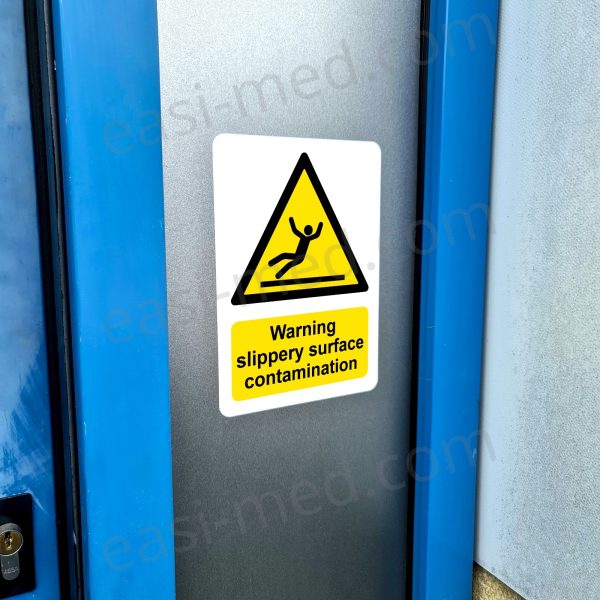
Our self-adhesive vinyl warning slippery contamination signs provide practical solutions for permanent mounting in protected industrial areas including maintenance workshops, tool rooms, equipment areas, and indoor processing zones where contamination risks exist but signs aren’t directly exposed to harsh chemicals or extreme conditions. Premium vinyl with permanent adhesive bonds reliably to painted walls, metal panels, equipment housings, and smooth industrial surfaces. Professional matt finish ensures legibility under industrial lighting including sodium vapor, mercury vapor, or LED high-bay fixtures common in manufacturing facilities.
Chemical-resistant inks withstand exposure to airborne contaminants, cleaning chemicals, and incidental contact with oils or solvents typical in industrial environments. Installation simplicity makes vinyl ideal for rapid deployment across multiple locations in large facilities. However, for areas with direct heavy contamination exposure, frequent contact with aggressive chemicals, or harsh outdoor industrial conditions, rigid PVC offers superior durability and chemical resistance essential for long-term reliable performance in the most demanding applications.
Rigid PVC Plastic Signs for Demanding Industrial Applications
For maximum durability in harsh industrial environments with direct contamination exposure, outdoor industrial applications, or areas subject to physical impacts and aggressive chemical exposure, our rigid PVC plastic slippery floor contamination signs deliver exceptional performance. Manufactured from 3mm thick industrial-grade rigid PVC, these signs withstand the most demanding industrial conditions including direct exposure to oils, solvents, chemicals, and process fluids that would destroy standard signage, ensuring reliable long-term service in contamination-prone industrial environments.
Advanced chemical-resistant formulation prevents degradation when exposed to petroleum products, industrial solvents, cleaning chemicals, acids, alkalis, and most industrial substances commonly causing floor contamination. Completely non-absorbent throughout material thickness prevents contamination penetration ensuring signs can be cleaned repeatedly without permanent staining or degradation. Impact-resistant construction withstands contact from equipment, tools, materials, and the physical demands of industrial operations without cracking or structural damage.
Multiple industrial-appropriate mounting options include mechanical fixing using stainless steel or coated screws preventing corrosion in contaminated environments, heavy-duty construction adhesive rated for industrial applications, cable ties for temporary mounting to equipment or structures, or integration with portable barrier systems for flexible contamination zone management. This versatility ensures appropriate installation meeting varied industrial operational requirements and environmental constraints while maintaining long-term mounting security despite vibration, impacts, and chemical exposure typical in manufacturing and processing facilities.
Comprehensive Industrial Application Guide
This specialized surface contamination warning sign is essential across industrial sectors where substance contamination creates slip hazards:
- Manufacturing facilities – machine shops, production floors, assembly areas, and manufacturing operations where machining oils, cutting fluids, hydraulic oils, lubricants, or process fluids regularly contaminate floors despite housekeeping efforts, requiring explicit contamination-specific warnings protecting workers from specialized industrial slip hazards.
- Vehicle maintenance and repair – automotive workshops, truck maintenance facilities, fleet service centers, and vehicle repair operations where motor oils, transmission fluids, brake fluids, coolants, and automotive substances create persistent contamination hazards requiring specialized identification and cleaning protocols.
- Food processing and production – food manufacturing plants, processing facilities, commercial kitchens, bakeries, and food preparation areas where cooking oils, fats, proteins, organic materials, and food substances create contamination requiring food-safe cleaning protocols distinct from industrial degreasing approaches.
- Chemical manufacturing and handling – chemical plants, processing facilities, storage areas, and operations handling chemicals, solvents, or reactive substances where chemical contamination creates both slip hazards and potential exposure risks requiring immediate identification and specialized emergency response protocols.
- Warehousing and
logistics – warehouses, distribution centers, and logistics facilities handling oils, chemicals, or substances in packaging that may leak creating contamination, particularly in loading areas where mixed cargo creates complex contamination scenarios requiring specific identification. - Loading bays and goods-in areas – external and internal loading zones, dock areas, and goods receiving facilities where vehicle fluids, cargo substances, packaging leaks, and weather-tracked contaminants create mixed contamination hazards requiring explicit warning and appropriate response protocols.
- Industrial cleaning and maintenance – areas during or after major cleaning operations using degreasers, solvents, or aggressive cleaning chemicals that themselves create temporary contamination hazards distinct from simple wet conditions requiring specialized safety precautions during remediation.
- Metalworking and fabrication – welding shops, fabrication facilities, metal processing operations, and manufacturing areas where cutting oils, coolants, metal working fluids, and lubricants create persistent contamination despite best efforts at containment and housekeeping requiring ongoing explicit warnings.
- Printing and coating operations – printing facilities, coating lines, finishing operations, and manufacturing areas using inks, solvents, coatings, or treatments that may spill or aerosolize contaminating floors with substances requiring specialized cleaning distinct from routine maintenance.
- Pharmaceutical and laboratory facilities – manufacturing areas, laboratories, and processing zones where chemical reagents, solvents, or process substances may contaminate floors creating both slip hazards and potential exposure risks requiring immediate recognition and appropriate emergency response.
Legal Compliance and Industrial Safety Standards
Deploying appropriate warning slippery surface contamination signs helps ensure compliance with UK health and safety legislation while meeting industrial safety management standards. The Health and Safety at Work Act 1974, Workplace (Health, Safety and Welfare) Regulations 1992, Health and Safety (Safety Signs and Signals) Regulations 1996, and Control of Substances Hazardous to Health (COSHH) Regulations 2002 all place duties on employers to identify, assess, control, and communicate about contamination hazards including resulting slip risks.
Contamination-specific signage demonstrates understanding that floor contamination represents a distinct hazard requiring specialized management beyond generic slip prevention. ISO 7010 compliance ensures regulatory adherence while explicit contamination identification shows sophisticated risk assessment recognizing different hazard mechanisms require different warnings and responses. This specificity can strengthen legal position by demonstrating thoughtful, comprehensive hazard identification and communication rather than generic one-size-fits-all warning approaches.
COSHH requirements mandate proper assessment and control of chemical and substance hazards including contamination scenarios. Contamination-specific signage forms part of demonstrating COSHH compliance by explicitly warning of substance hazards and their consequences. Documentation of contamination risk assessments, specific cleaning protocols for different contaminants, staff training on contamination hazards and proper response, inspection systems verifying contamination control effectiveness, and incident investigation addressing contamination events all integrate with signage creating comprehensive evidence of professional industrial safety management meeting legal obligations and industry standards.
Best Practices for Industrial Deployment
Contamination Zone Management: Deploy signs immediately when contamination occurs or is discovered. Position at all approaches to contaminated areas providing advance warning before workers step onto contaminated surfaces. Use alongside barriers or tape to physically restrict access to extensively contaminated zones requiring specialized cleanup. Combine signage with communication to maintenance teams specifying contamination type enabling appropriate cleaning protocol selection and PPE requirements. Remove signs only after proper decontamination and verification that surfaces have returned to normal safe slip resistance through appropriate testing or assessment.
Integration with Contamination Control Programs: Incorporate signage into comprehensive contamination management including source control preventing contamination occurrence, containment systems limiting contamination spread, rapid detection and response protocols minimizing contamination duration, specialized cleaning procedures appropriate for specific contaminants, inspection and monitoring verifying control effectiveness, and continuous improvement learning from contamination events to prevent recurrence. Signage alone cannot substitute for proper contamination prevention and control but forms essential communication component within comprehensive industrial hygiene and safety management systems.
Order Your Warning Slippery Surface Contamination Signs Today
Provide specialized industrial hazard communication by ordering Warning Slippery Surface Contamination Signs from Easi-Signs today. Available in A5, A4, and A3 sizes with your choice of durable self-adhesive vinyl for protected industrial areas or industrial-grade rigid PVC plastic for harsh contamination-prone environments. All our slippery surface contamination signs are manufactured in the UK to exacting quality standards ensuring industrial durability, chemical resistance, and full compliance with ISO 7010 and UK health and safety regulations including COSHH requirements.
We offer competitive pricing with volume discounts for large industrial facilities requiring multiple signs across extensive operations. Fast order processing and reliable UK-wide delivery ensure your specialized industrial safety signage arrives when needed. Our experienced customer service team provides expert guidance on sign selection, material choice for specific industrial applications, and deployment strategies for effective contamination hazard management. Order today and benefit from specialized industrial-grade signage, enhanced contamination hazard communication, and confidence in meeting comprehensive industrial safety obligations.
Related Industrial Safety Signs
Browse our extensive range of Warning Signs including Warning Slippery Surface, Caution Slippery Floor, Warning Chemical Hazard, Danger Hazardous Substance, and COSHH Warning signs. Easi-Signs is your trusted UK supplier for professional industrial safety signage addressing specialized contamination hazards in manufacturing, processing, and industrial operations.
Reviews
There are no reviews yet.